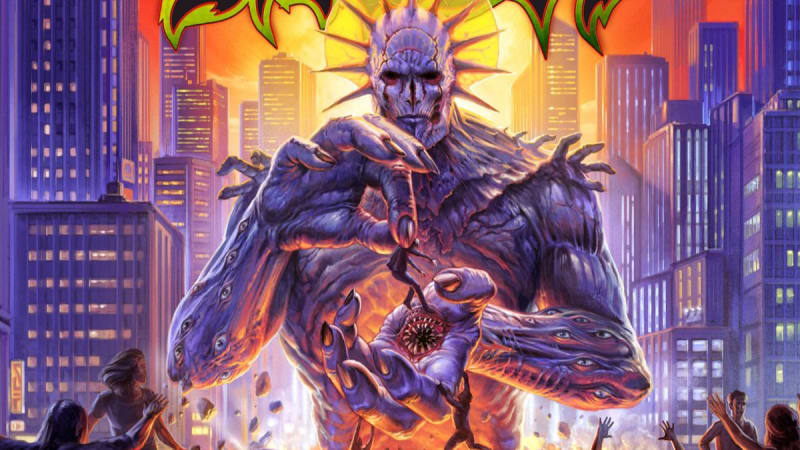
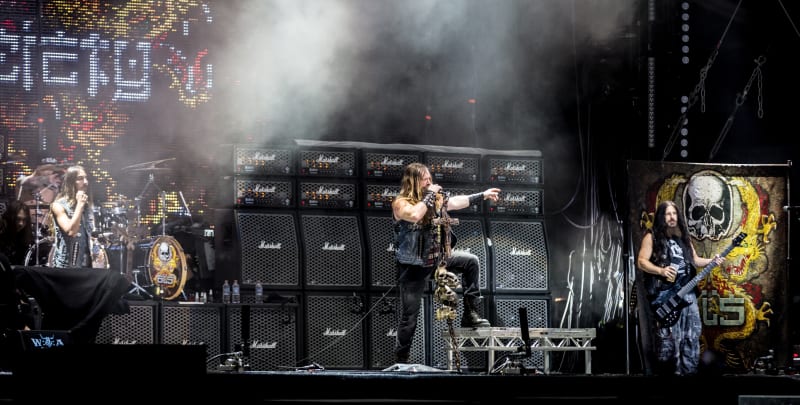
Engines of Demolition arrives March 27 on MNRK Heavy. It is the first Black Label Society record since Doom Crew Inc. (2021). It is also the first BLS album recorded after Ozzy Osbourne's death in July 2025. Those two facts are related in ways that matter.
What You're Getting
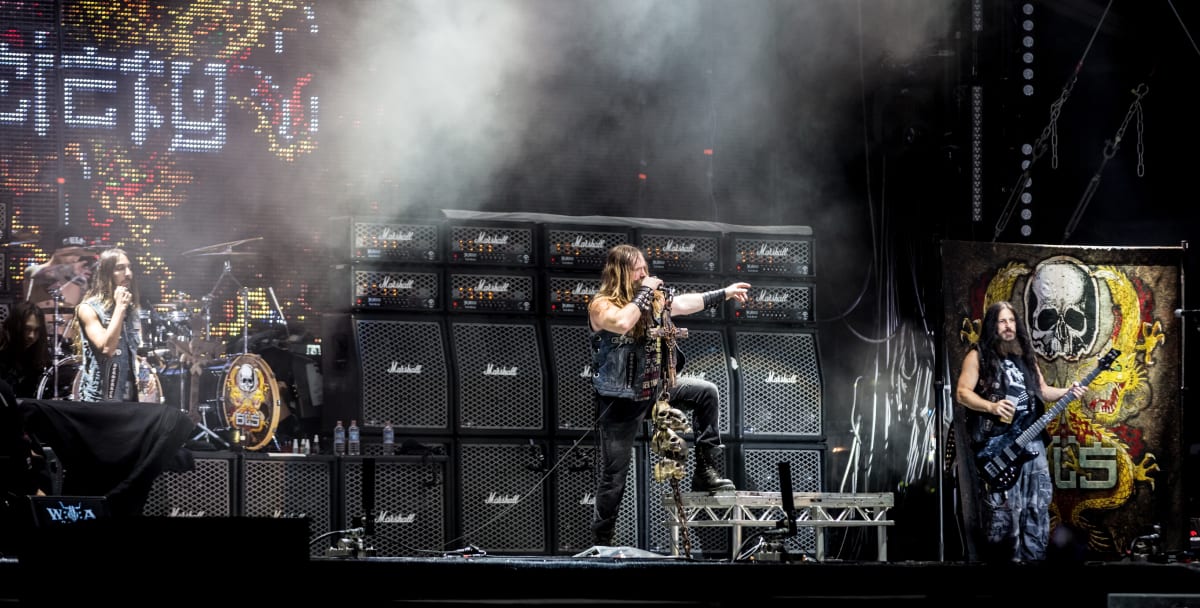
Fifteen tracks. The record runs long — longer than most modern metal albums dare — and it earns the runtime. Zakk Wylde built this at the Black Vatican, his home studio in Los Angeles, across four years and between legs of his Pantera touring commitments. There are no singles-chasing pivots here, no attempts to soften the edges for streaming algorithms. This is the sound BLS has always made: riff-forward, groove-heavy, built on Wylde's particular brand of guitar playing that sits somewhere between Southern metal and straight-ahead heavy rock, tied together by pinch harmonics and a production clarity that lets the low end breathe.
The record opens in exactly the mode you want. Wylde hasn't lost any speed or precision. His playing remains technically imposing in a way that sounds effortless rather than showy — he doesn't play fast to demonstrate that he can, he plays fast because the riff requires it. The rhythm section locks into that groove and stays there. This is Black Label Society doing what it has always done, and doing it without any visible doubt about whether it still works. It works.
The Weight of 38 Years
To understand why Engines of Demolition lands differently than the last several BLS records, you need the context. Zakk Wylde was 20 years old when he sent a demo tape to Ozzy Osbourne in 1987. He got the audition. He got the gig. What followed was one of the defining guitar partnerships in post-Sabbath heavy metal — Wylde on No More Tears (1991), on Ozzmosis (1995), returning for Black Rain (2007) and Patient Number 9 (2022). The professional relationship spanned nearly four decades.
It was not purely professional. Wylde has spoken about Osbourne the way you speak about someone who redirected the course of your life. The loyalty ran both directions. When Ozzy Osbourne died on July 22, 2025 — seventeen days after the Back to the Beginning farewell concert in Birmingham — Jack Osbourne called Wylde with the news while he was on the road with Pantera.
Wylde had already written the music for what would become "Ozzy's Song." He had not yet written the words.
Ozzy's Song
The story of the recording is specific, and it matters. After the Pantera tour, Wylde returned to his library — a room lined with Ozzy Osbourne's books. He sat with a photograph of his mentor. He listened to the music he had already finished. He wrote the lyrics.
That is the specific geography of grief: a man in a room full of a dead man's books, writing words for music the dead man will never hear. The song that resulted closes Engines of Demolition in the final position — which is the correct call. You don't put a tribute like this in the middle. You put it last, in the slot reserved for what you most want someone to carry out of the room with them.
"Ozzy's Song" is not a sentimental piece. It is not built for radio or ceremony. It is built for someone who sat in a library and had to figure out what to do with 38 years of relationship when the other person is no longer there. The song works because it doesn't try to be more than that.
The Rest of the Record
The tracks that precede it are doing the work you hired Black Label Society to do. Heavy, rhythmically locked-in, vocally direct without being predictable, and anchored throughout by guitar playing that remains in a category most current heavy rock acts don't access. Wylde's tone is immediately identifiable — no one sounds like this, and no amount of gear replication has ever quite captured why. Part of it is technique. Part of it is the specificity of his musical instincts.
The acoustic passages — BLS has always included them, and Wylde's fingerpicking ability is as underrated as his electric work — land with more weight this cycle than they might otherwise. The contrast hits harder when the heavy sections hit harder. The sequencing is deliberate: the record doesn't front-load and fade, it builds toward "Ozzy's Song" in ways that are probably not accidental.
The Verdict
Engines of Demolition is the best Black Label Society record since Order of the Black (2010), possibly since The Blessed Hellride (2003). It is also a record that exists in a specific historical moment — the first significant heavy metal response to Ozzy Osbourne's death from someone who was present for the defining years of his solo career.
Zakk Wylde made a grief record without announcing that he was making one. He built 15 tracks of BLS doing what BLS does, and then put the one track that explains why all of it mattered in the last slot, in a room full of a dead man's books.
That is the correct way to do this.
Pick up Engines of Demolition on Amazon — physical formats available now. Tour dates at our metal tours hub — the North American run continues through April 10. More from Metal Mantra: Black Label Society Album Announcement | Metal News