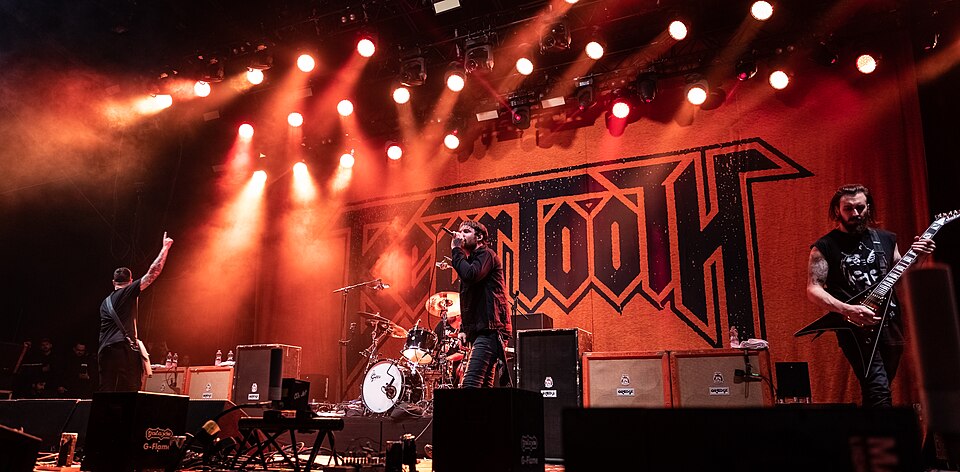
Beartooth's Caleb Shomo deleted his Instagram account this week. No statement. No explanation. Just gone. The timing — days after the release of the band's new single "Free" and the wall of abuse that followed — says everything you need to know about what happened, even without an official reason attached to it.
Then Chris Fronzak posted his take. And the conversation got worse.
What Actually Happened
"Free" is Beartooth's first release on Fearless Records and the opening signal of a new album cycle. Shomo co-wrote and co-produced it alongside Jordan Fish — the same collaborator who helped architect Bring Me The Horizon's pop pivot. The song leans into clean melody, emotional openness, and a version of Shomo the audience hadn't seen before. He showed up differently. A new look. A new sound. A stated intent to make the most honest music of his life.
The response from a portion of the metalcore audience was homophobic pile-on. Slurs in the comments. The abuse reportedly followed him to his wife's social media. Within days, the Instagram account was gone.
No one should need this spelled out, but here it is anyway: a musician showed up honestly, got targeted for it, and left the platform. That's not complicated. That's the scene doing something ugly to one of its own.
Then Fronzak Posted
Attila frontman Chris Fronzak posted twice on X on March 3rd, the night Shomo's account disappeared:
"Looks like Caleb Shomo dropped the 'S.'"
Then, minutes later: "It's no big deal, he just dropped the S out of his name."
The implication is obvious. When people pointed that out, Fronzak called them a "soft ass pussy that can't read a joke." He then expanded the thread into a broader statement about the music industry: a claim that his friend's band was told by Rise Records they wouldn't succeed without a trans person or female member, followed by a conclusion that the industry is "brainwashed beyond belief" and that "music is fully lost."
A lot of words to defend one cheap shot at a guy who had already left the room.
What Fronzak is presenting as cultural commentary is actually just cover. The original tweet wasn't a critique of the industry. It was a targeted jab at an individual who had just been run off a platform by exactly the kind of crowd Fronzak is signaling to. The follow-up tweets didn't add context — they just built a louder case for why he said what he said.
Why This Matters Beyond the Beef
We wrote recently about the tension inside metalcore as the genre's biggest names evolve away from the sound that built them. That piece was about the artistic dimension — what it means when a band leaves its genre behind, whether that's growth or departure, and who fills the space they vacate.
What happened this week is that conversation becoming uglier and more personal. The abstract question of "is Beartooth still metalcore?" turned into harassment directed at a specific person for how he looked in a music video. And Fronzak's response — whatever he claims he meant by it — landed squarely on the side of the people doing the harassing.
This is the other side of the metalcore identity argument. When a genre's most vocal gatekeepers respond to artistic change with contempt and pile-on humor, they reveal exactly what they're protecting. It's not the music. It's a set of boundaries around who is allowed to evolve and in which direction.
Shomo's "Free" may or may not be the direction his audience follows him. That's a legitimate conversation. The merits of the song, the wisdom of the creative pivot, the commercial gamble of co-writing with Jordan Fish — all of that is fair territory. What isn't fair territory is using someone's appearance as a punchline while that person is being harassed off the internet.
The Scene Has a Choice to Make
Metalcore has spent the last several years absorbing bands from every end of the spectrum — deathcore acts going pop, pop acts going heavy, genre lines dissolving in real time. Acts like Knocked Loose are proving extremity still works. Spiritbox, Bad Omens, Sleep Token are all pulling rock audiences into adjacent territory. The genre is actively being redefined from multiple directions simultaneously.
In that context, Beartooth's move toward melodic accessibility with "Free" is not an outlier. It is part of a pattern. The question is whether the loudest voices in the scene can engage with that pattern as a musical conversation — or whether they'll keep responding to it the way they responded this week.
Caleb Shomo will make more music. He said as much in his statement about the new album being the most honest work of his life. He'll be back, on whatever platform he chooses, when he's ready.
The people who made him leave are still there.
More on this: Beartooth, Atreyu, and the Great Metalcore Escape