Bruce Dickinson says his next solo record is already in the can, and the pitch is simple enough to matter: 16 tracks, 21 days, recorded live.
That is a better headline than another legacy-metal rollout full of mood boards and pre-order tiers. Dickinson is saying the band went into Dave Grohl's Studio 606 in Northridge, California, and played. No mystery campaign. No artificial scarcity. No pretending a teaser trailer is an event. Just musicians in a room trying to catch something before the polish kills it.
In a new Rolling Stone interview, Dickinson described the sessions as "16 tracks in 21 days, all 100 percent live" and called the approach "the anti-A.I. generation." That line could sound like old-man marketing in the wrong hands. Here, it lands because Dickinson has always been at his best when there is blood pressure in the performance.
The record is expected to follow 2024's The Mandrake Project, his first solo studio album since Tyranny of Souls in 2005. There is no title yet. No tracklist. No single. No firm release date. Dickinson has pointed toward 2027, which makes sense when Iron Maiden still takes up oxygen like few bands in heavy music history.
The lineup is the important part. Dickinson recorded with the musicians from his recent solo cycle: keyboardist Mistheria, drummer Dave Moreno, bassist Tanya O'Callaghan, and guitarists Chris Declercq and Philip Näslund. That is not a random cast built around a famous singer's calendar. That is a functioning band carrying momentum from the road into the studio.
That distinction matters with Dickinson. His solo catalog has always had to fight the Maiden shadow, which is not a fair fight for anyone. The Chemical Wedding earned its reputation because it had its own spine. Accident of Birth worked because it sounded like a real lane, not a side errand. The next record needs that same confidence or it becomes a footnote between Maiden cycles.
The live-tracked setup gives it a fighting chance. Heavy records do not need to sound sloppy to feel alive, but they do need some human danger. Dickinson's voice has never been about sterile perfection. It is about attack, theater, nerve, and the occasional edge that tells you a person is pushing air for real.
That is why the "anti-A.I." line is useful only if the record backs it up. Metal does not need a slogan against machines. It needs performances with enough personality that nobody would confuse them for product. If Dickinson's band really cut 16 songs live and kept the takes honest, that gives the album a reason to exist beyond completist loyalty.
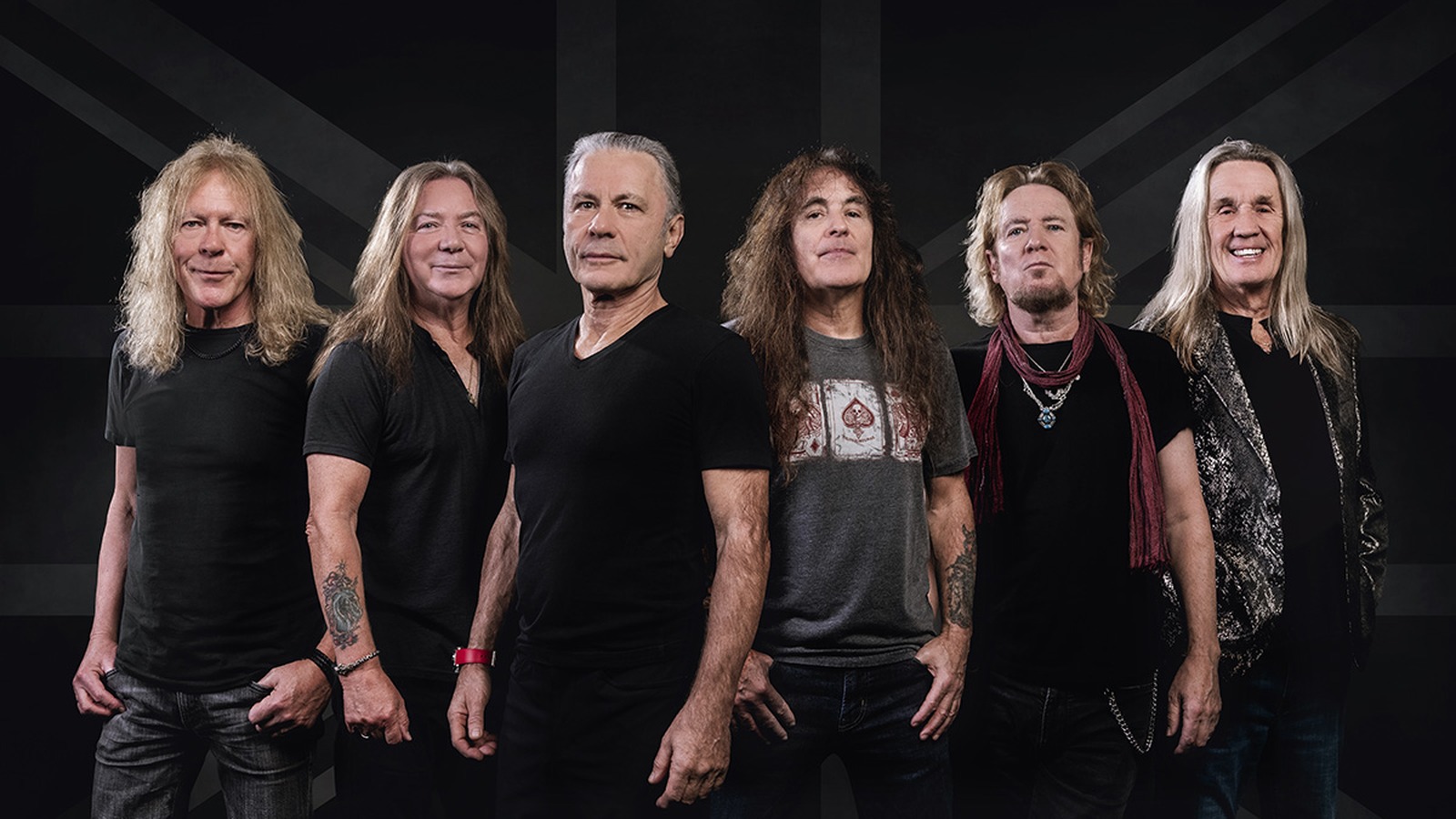
There is also a timing advantage. Maiden's universe remains massive, and Metal Mantra has already covered the band's broader legacy, including Iron Maiden's Rock Hall moment. Dickinson's solo work can move differently. It can be stranger, looser, heavier in places, and less obligated to serve the institution.
That is the lane worth watching. Not "Maiden singer makes another album." Not a nostalgia victory lap. A veteran metal vocalist with a real band, a fast recording window, and enough ego to still want the thing to punch.
The danger is obvious too. Dickinson talking up live tracking sets a standard the album has to meet. If the final mix gets sanded down until it sounds like every other modern hard-rock production, the whole argument collapses. The promise here is not speed for its own sake. It is feel. It is players reacting in the same room instead of a grid pretending to breathe.
Until the title and release date land, the concrete details are enough: the songs exist, the sessions were fast, and Dickinson is framing the record around live performance instead of studio surgery. That gives fans a reason to care without pretending there is more confirmed than there is. For now, the restraint is the point: enough information to track it, not enough to inflate it.
Anyone catching up before the next cycle can revisit Bruce Dickinson releases on Amazon. The next album sounds like a 2027 problem. If it really carries the room the way Dickinson says it does, it will be a good one.