This one hurts in a way that doesn’t fade after the first reread. Ozzy Osbourne is dead, and the world feels quieter, duller, less dangerous because of it. The Prince of Darkness passed away on July 22, 2025, at his home in Buckinghamshire, and even writing that sentence feels wrong, like history refusing to behave. Ozzy was never supposed to be mortal. He outlived excess, addiction, scandal, broken bones, broken systems, and a music industry that tried repeatedly to sand down what made him dangerous. He survived things that would have buried lesser men before the first chorus. And yet here we are, saying goodbye to the voice that gave metal its soul, its menace, and its misfit heart. For anyone who grew up with Black Sabbath rattling cheap speakers or Ozzy solo records blasting from rusted-out cars, this isn’t just the loss of a musician. It’s the loss of a constant. Ozzy was always there. And now he isn’t. That realization hits like a hammer to the chest.
Ozzy came from nothing. That matters. Birmingham steel-town nothing. A working-class kid with dyslexia, no safety net, no polish, and no future that made sense on paper. He didn’t climb a ladder. He clawed his way out of the gutter by sheer force of will and an unrepeatable voice. When Black Sabbath formed at the end of the ’60s, nobody involved knew they were inventing heavy metal. They just knew the world was ugly, loud, and violent, and the music should sound like that. Ozzy’s voice wasn’t pretty in the traditional sense, but it was haunting, desperate, and human. When he sang about war, madness, paranoia, and doom, it didn’t feel theatrical. It felt lived-in. Sabbath didn’t just create riffs; they created atmosphere. Fear. Weight. And Ozzy stood at the center of it, sounding like a siren calling lost kids home. Heavy metal didn’t exist before Black Sabbath, and it certainly didn’t exist without Ozzy Osbourne. That’s not mythology. That’s fact.
Being fired from Black Sabbath in 1979 should have been the end. It would’ve been for almost anyone else. Addiction had its claws in him, the industry had written him off, and the narrative was already forming: tragic pioneer burns out early. Ozzy refused that ending. What followed was one of the most unlikely second acts in music history. Blizzard of Ozz didn’t just prove he could survive without Sabbath; it proved he could thrive. Songs like “Crazy Train,” “Mr. Crowley,” and “Diary of a Madman” didn’t sound like nostalgia plays. They sounded hungry. Dangerous. Forward-moving. Ozzy didn’t retreat into legacy status. He built a solo career that rivaled and in some ways eclipsed his original band’s reach. He became the rare figure who mattered across multiple generations while still actively shaping the future of the genre.
And yes, the madness mattered. The bat. The doves. The chaos. The stories that became folklore. Ozzy lived the kind of rock star excess most bands cosplay but never truly inhabit. But what separated him from caricature was honesty. There was never an attempt to pretend he had it all under control. He was open about his flaws, his addictions, his failures. He wore them on his sleeve. The moral panic crowd called him evil. Parents feared him. Politicians and preachers tried to turn him into a scapegoat. Ozzy absorbed all of it and turned it into fuel. He didn’t clean himself up to make others comfortable. He let the world scream while he laughed, staggered forward, and kept singing. That refusal to conform is a massive part of why metal culture exists the way it does today.
Then something unexpected happened. Ozzy became human to the mainstream. The Osbournes didn’t soften him; it revealed him. The confused, swearing, big-hearted mess behind the eyeliner. Suddenly the Prince of Darkness was a baffled dad yelling at dogs and trying to understand remote controls. It could’ve destroyed his credibility. Instead, it deepened it. Metalheads already knew Ozzy wasn’t a cartoon villain. Now the rest of the world did too. He became something few metal icons ever achieve: universally beloved without ever betraying the scene that raised him. He never apologized for being metal. He just showed people who he really was.
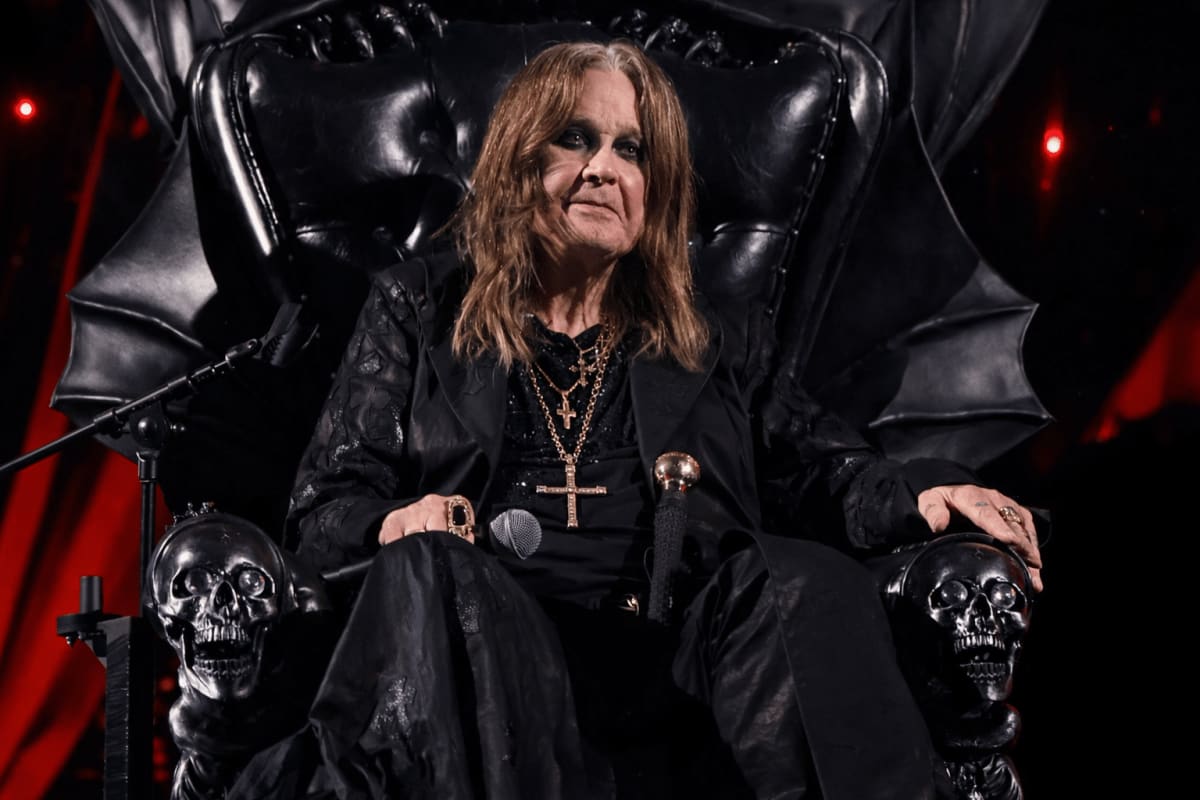
The final years were hard to watch. Parkinson’s. Injuries. Pain that refused to let go. Ozzy never hid it, but he also never stopped wanting to perform. Touring became impossible, and that admission cut deep. Still, he gave everything he had left. The final show in Birmingham earlier this month wasn’t just a concert. It was a farewell ritual. A city paying tribute to its most famous son. Ozzy seated on a throne, visibly frail but unmistakably commanding, while tens of thousands of voices carried him through the songs that defined their lives. When “Mama, I’m Coming Home” hit, grown adults openly sobbed. When “Paranoid” closed the night, it felt like time folding in on itself. The beginning and the end sharing the same stage. Seventeen days later, he was gone. There’s something cruelly poetic about that.
The response to Ozzy’s death tells the real story. Metal bands. Rock bands. Pop artists. Entire scenes stopping to pay respect. Tributes pouring in from artists who never sounded anything like him but were still shaped by his refusal to play it safe. That’s the mark of a true pioneer. Ozzy didn’t just influence metal. He changed the rules of who was allowed to exist loudly, imperfectly, and unapologetically in music. Without him, the door doesn’t open for countless bands, festivals, careers, and lifetimes of noise. Without Ozzy, metal doesn’t become a culture. It becomes a footnote.
Here’s the blunt truth: there will never be another Ozzy Osbourne. Not because the industry won’t try, but because the conditions that created him don’t exist anymore. You can’t manufacture that kind of authenticity. You can’t fake surviving your own mythology. Ozzy lived every lyric, every rumor, every headline, and somehow came out the other side still smiling, still grateful, still metal to his core. He wasn’t perfect. He was better than perfect. He was real. And that’s why this hurts so much.
The man is gone. The voice is silent. But the echo is eternal. Every doom riff. Every festival crowd. Every kid discovering Sabbath for the first time and realizing music can be dark, heavy, and honest all at once. That’s Ozzy. Always has been. Always will be. Rest easy, Prince of Darkness. The world is darker without you, but metal will make sure you’re never forgotten.
Related: Metal & Hard Rock News – December 5, 2025: New Songs, Farewell Events & Touring Updates
More Metal Mantra: Rundowns | Metal Tours