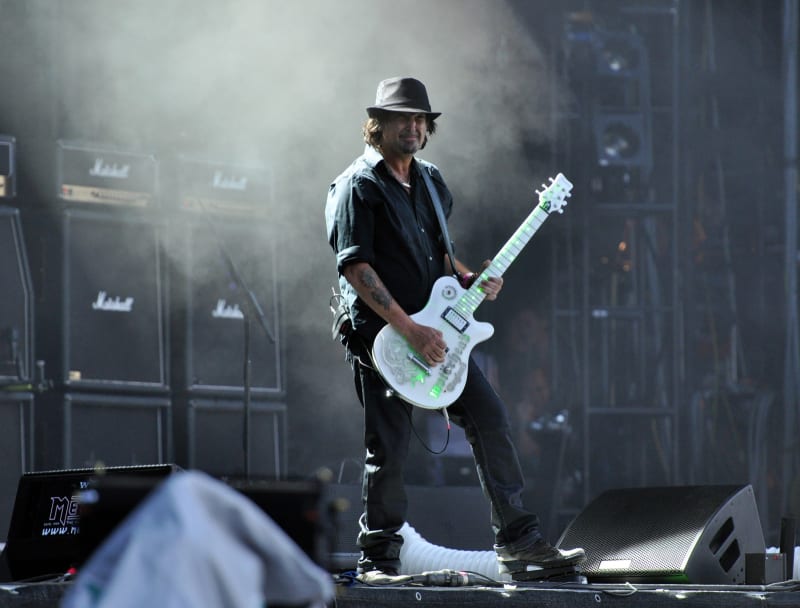

Geoff Tate released "Power" this week — the first single from Operation: Mindcrime III, the final chapter of the trilogy that began in 1988 and has now consumed almost four decades of his career. The track features John Moyer of Disturbed on bass and producer Kieran Robertson on guitar. The album arrives May 3.
Good song. But the more interesting thing Tate said this week wasn't about the single.
The Math Problem
"I wish I could play everything I ever wrote," Tate said in a recent interview. "I really do. At least I'd like to do a concert, like a series of concerts, of just playing different stuff that I don't normally play. There's music on albums I've never played live."
It's not a complaint. It's arithmetic.
Tate has been recording since 1983. Between the Queensrÿche catalog — The Warning, Rage for Order, the landmark Mindcrime, Empire, Promised Land — and his post-lawsuit solo work including Frequency Unknown and now a three-album Operation: Mindcrime continuation, he's carrying more material than most artists twice his age can manage in a single career.
A standard hard rock and metal show runs ninety minutes. Operation: Mindcrime — still his most requested material — runs sixty minutes as a record. Mindcrime II runs sixty-five. Mindcrime III is coming May 3. Playing all three back to back isn't a show; it's an endurance event. His solution for the overcrowded catalog? "A matinee show and an evening show." He was only half joking.
Right now, Tate is presenting the Mindcrime — The Final Chapter tour, which bills itself as the last time he'll perform the original album in its entirety. Full string ensemble, laser show, full concept staging. That commitment to presentation makes the math worse — when you're locked into a full-album concept show, deep cuts from Promised Land or Rage for Order don't fit without breaking the narrative arc the production is built around.
Scott Ian Said the Same Thing
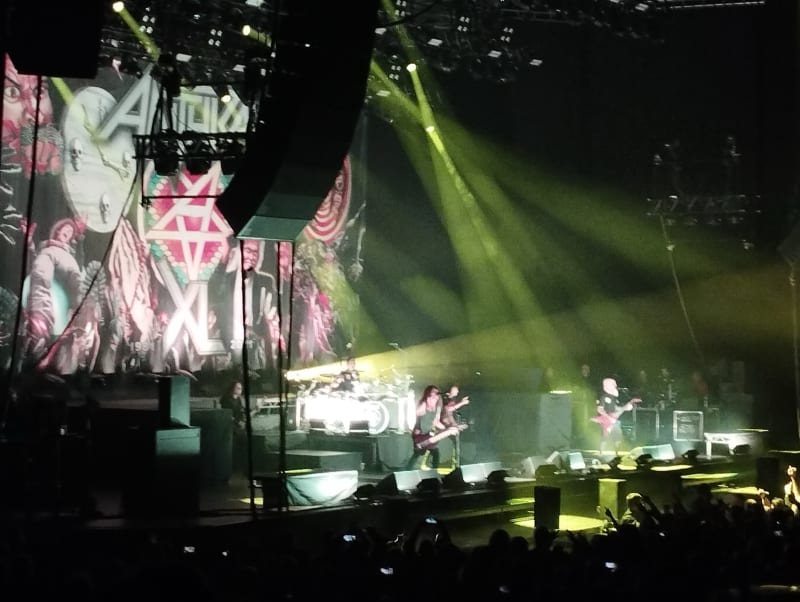
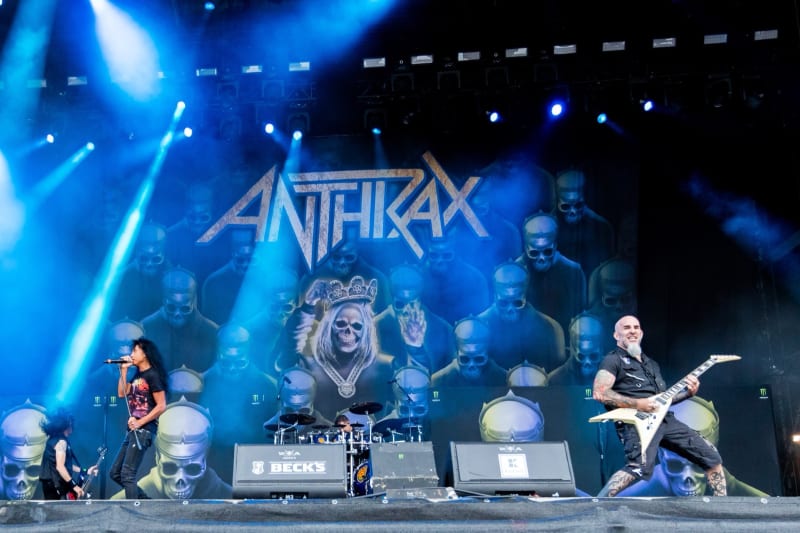
Three thousand miles away and a few days earlier, Scott Ian was talking to an Australian outlet about Anthrax's upcoming tour dates and landed in almost the same place.
"It's been so long since we've been here," Ian said about Australia. "Really, it doesn't matter what we do at this point." He's planning to rotate the catalog, noting that on recent North American dates Anthrax has been opening with "A.I.R." — the lead track from 1985's Spreading the Disease — instead of the usual "Among the Living."
The reaction from some fans? Confusion. Not because they didn't like it, but because they didn't know it.
"It's always odd to me what people know and don't know off our records," Ian said. He pointed at the obvious culprit: streaming algorithms have increasingly narrowed audience awareness to a band's top twenty playlist songs, leaving the rest of the catalog — even great records — invisible to everyone but the dedicated core.
Anthrax have been a band for over forty years. They have twelve studio albums. Their top song on Spotify is "Madhouse" — a 1987 track from Among the Living. Everything else competes for attention against that gravity well.
The Broader Problem
Both men are describing the same structural trap. Build a long enough catalog, accumulate enough context and history, and the catalog starts working against you. Fans arrive knowing your biggest songs and nothing else. The algorithmic surfaces that now control discovery actively push them toward the same handful of tracks. The 90-minute show can't hold the full history. And the longer your career, the worse the math gets.
Neither Tate nor Ian is complaining. Ian played through weeks of debilitating back spasms to finish the Canadian run and still get to Australia. Tate is finishing the trilogy he started in 2015 and taking it on the road with a full production. These are not men looking for sympathy about the demands of their own success.
But they're both doing the math out loud. And the math doesn't lie: at forty-plus years in the game, the catalog becomes a problem that no setlist fully solves.
The new Anthrax album — their first in nearly a decade — is due in May. Operation: Mindcrime III follows May 3. Between the two, 2026 is shaping up as a year where some of metal's longest-running acts are closing chapters and opening new ones, whether audiences are paying attention to the full discography or not.
Stream "Power" now. Pre-order Operation: Mindcrime III on Amazon. Tickets for the Final Chapter tour at Ticketmaster.