Maynard James Keenan runs his in-ears bone dry at live shows. No crowd bleed. No ambient room sound. Nothing from the audience leaking into his monitor mix. He told Rick Beato exactly why, and the answer isn't what most people assume.
"It has nothing to do with being adored. It has to do with presenting these songs the best we can. And the best way to do that is for me to not hear you. I have to hear Mat [Mitchell]. I have to hear the drums. I have to hear me in context so that we can present this thing to you."
That's the full framework in four sentences. The crowd doesn't factor into his mix because the moment it does, the performance becomes reactive — responding to the room instead of executing the song. Deliberate versus reactive. For a vocalist whose entire approach is built on precision and control, letting external energy into the equation introduces a variable that serves the audience's experience at the expense of the performance itself. His position is that blocking the crowd out is, paradoxically, how he serves them best.
The conversation came during a new discussion with Beato centered on Puscifer's latest record, Normal Isn't. But it ranged well past that album into how Keenan navigates the practical mechanics of performing live — the kind of deep-dive content you can follow across our features section — what he hears, what he can't hear, and what he deliberately filters out.
One of the more specific threads: Puscifer's "Pendulum" sits at the absolute floor of his live vocal range. The song is built around a register so low that performing it live required real logistical problem-solving. When Keenan filmed the song at The Exchange in downtown Los Angeles, he had to physically relocate himself to a back corner of the stage — away from cymbals, amplifiers, everything generating volume — just to be able to hear his own vocal well enough to deliver it cleanly.
"I literally had to be in the back corner away from cymbals, amps, everything, because I had to be able to hear the vocal live," he said. "So, I think that was the most nerve-wracking part of that song — performing that live — is making sure that I could hear myself."
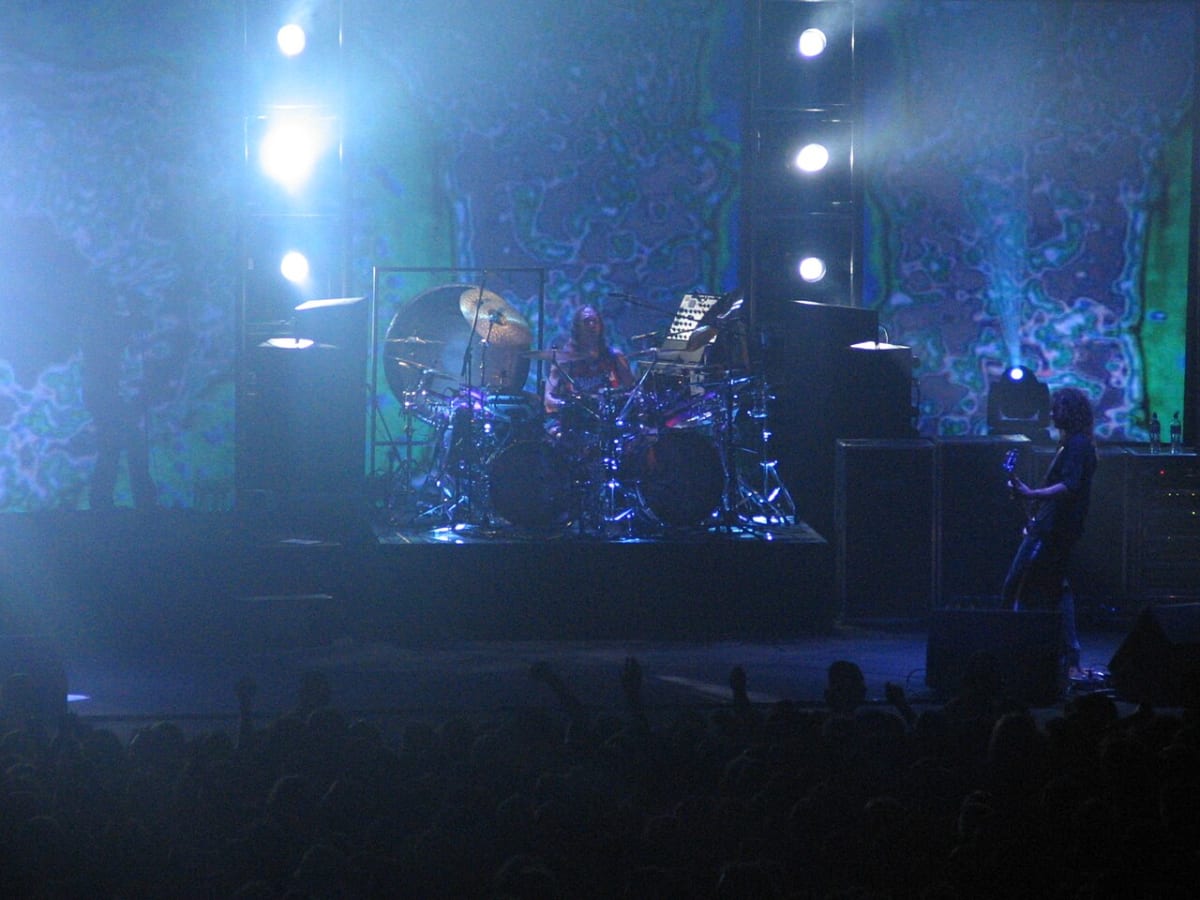
That same song is off the table entirely with Tool. Beato asked whether "Pendulum" represented the bottom of Keenan's live range. His answer was direct: "That's it. As far as being able to play live, that's the bottom of the range. And I could do that with this band. I couldn't do that with Tool. Because all the ambient noise on stage with Danny's [Carey] drums and Adam's [Jones] 16 guitar amps and the bass and everything, I wouldn't be able to do a song like this with Tool. Because it's just too loud on stage."
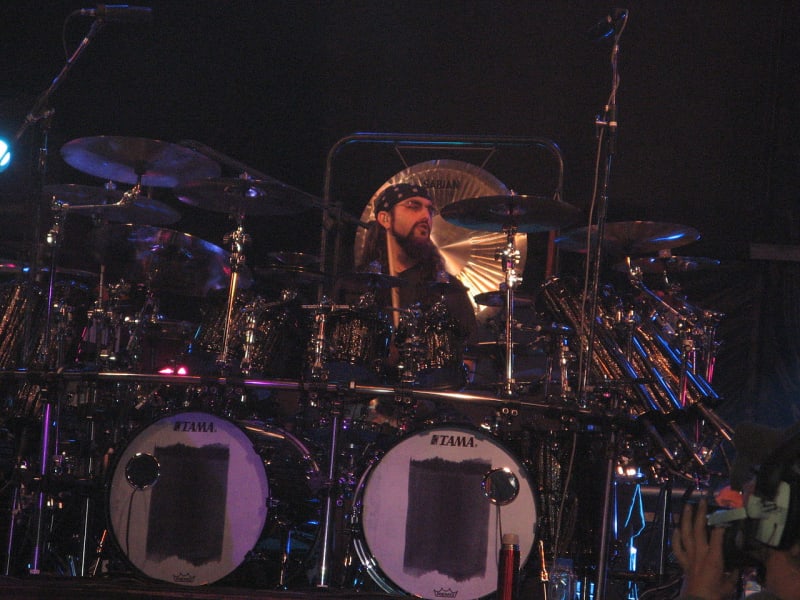
The physics of a Tool show make that register acoustically inaccessible. Danny Carey's drum setup is enormous by any standard. Adam Jones runs a wall of amplification that was purpose-built for the sound Tool makes. There is nowhere to stand on a Tool stage that gets you far enough from that volume to sing in the low register "Pendulum" demands. The distance Keenan can put between himself and those instruments with Puscifer simply doesn't exist in the Tool live environment.
This isn't new territory for Keenan. He addressed his stage positioning with Tool in a 2024 Kerrang! interview, explaining why he stands elevated at the rear of the stage rather than at the front like most frontmen — part of an ongoing story covered in Metal Mantra's metal news. "With Tool, Danny's drums are so loud, he has like 17 arms and 15 legs, and then you've got Adam's row of amps and Justin's wall of bass. It just makes it way harder for the front-of-house to have a mix if [I'm] down front. And the position up top is also great, visually, because I can see what's going on, we can connect with each other by looking at each other." Stage position isn't a personality choice. It's a performance requirement.
The in-ears conversation led him somewhere worth paying attention to if you've ever watched a big-name vocalist sound unexpectedly off at a major show. Keenan's explanation for why singers often sound flat live isn't what most people attribute it to. "There's a lot of singers that you hear them live and they sound like they're singing flat. It's because their vocal is too loud over the music in their mix." When your own voice sits too high in the monitor mix relative to the track you're singing to, you begin adjusting to what you're hearing — which is a version of the music that's been effectively shifted in pitch relative to your loudly-present vocal. The result, from the front of the house, is a vocalist who sounds consistently flat despite being technically capable.
He named Chris Cornell as an example. "I heard Chris Cornell did that a lot. And you know that guy can sing. There's no question that guy can sing his ass off, but with his in-ear monitors, his vocal was so loud in his mix, that he sounded like he was singing flat. He's not flat. He's singing to what he's hearing." It's a generous and technically precise framing of something that's often dismissed as fatigue, pitch issues, or lack of preparation.
The thread running through all of it is the same: control. What goes into your ears determines what comes out of your voice. And what comes out of your voice is the only thing that matters when you're standing in front of ten thousand people who came to hear the song done right. Keenan's approach — strip the mix down, eliminate the crowd, hear only what you need — is the most direct route to delivering an accurate performance. The crowd experience is a byproduct of that. Not the goal.
Follow all breaking metal news at Metal Mantra. Check out the latest tour announcements and dates as they drop.
Shop Tool and Puscifer albums on Amazon.
Explore Tool's catalog on Amazon.