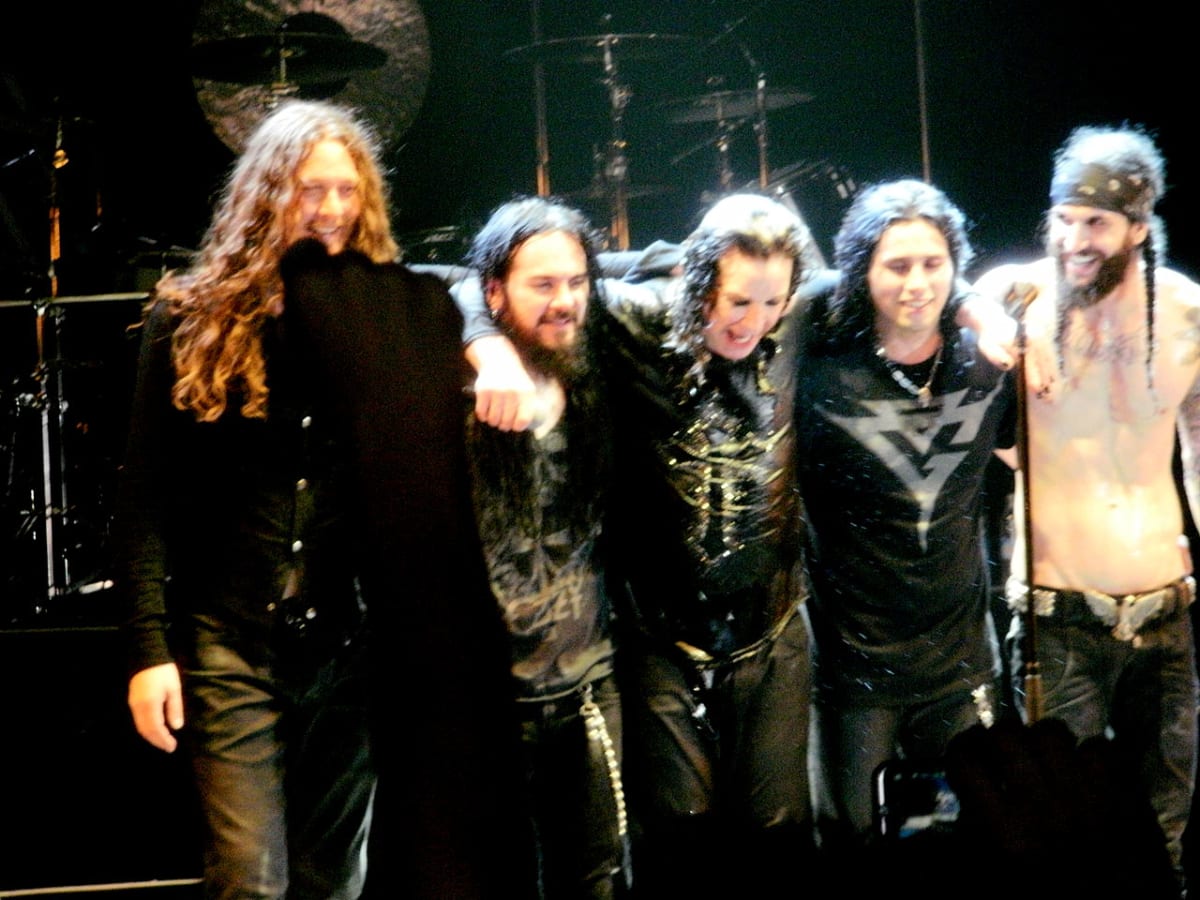
Rob "Blasko" Nicholson has been inside this industry since 1985. Cryptic Slaughter on Metal Blade. Then Ozzy Osbourne. Then Rob Zombie — twice. And for over twenty years now, running the business side as founder of Mercenary Management, where his client list has included Black Veil Brides and Zakk Wylde. That's not a resume built on timing or luck. That's four decades of watching how this machine actually operates from every angle: unsigned kid in a van, touring musician, recording bassist, artist manager.
So when he tells Music Industry Insights Worldwide — a channel focused on equality and diversity in music — "knowing everything that I know now, I don't know that I would start a band now," that carries weight. This isn't defeatism from someone who checked out. It's a cold assessment from someone who still plays in one of the biggest active hard rock bands on the planet.
His reference point is honest. Cryptic Slaughter started grinding in 1985 and signed to Metal Blade in the same year. Heavy metal was not a career choice back then — not for underground kids doing hardcore-thrash. You did it because it was part of your DNA. Because you had to get it out. You got in a van, you put yourself in uncomfortable and sometimes dangerous situations, and you built something real because there was no alternative.
The system that existed then — whatever its faults — had a logic to it. "Whenever we were younger, there was a lot of gatekeeping that kind of kept things in check," he said. "You started a band, you made a demo, you kind of put it out there, and if a record label liked it, they would sign you and put out your record. And then that record would go in record stores, and people would either buy it or they wouldn't buy it." It was blunt and often unfair. But it was legible. You knew what the path looked like.
Now it isn't legible, and the problems compound on each other. The first one is fragmentation. There is no single place where a new artist's audience lives. Every platform has its own format, its own algorithm, its own culture. YouTube wants long-form horizontal video. TikTok wants short vertical content, acoustic performances, trends. Instagram Reels. Spotify playlists. Discord servers. Twitch. The choice of where to put your energy is itself exhausting, and as Blasko put it: "Careers have started on YouTube. Careers have started on Instagram. Careers have started on MySpace. Careers have started on TikTok. And so where do you even begin? It's almost like you kind of just do the best you can, throw it out there and hope for the best."
That's option paralysis — his term for it. Too many inputs, too many supposedly viable paths, and no reliable signal about which one will actually work for your specific sound, scene, and audience.
The second problem is worse. Even after you've put in the work to build a following on a given platform, that platform's algorithm now actively limits how many of your own followers see your content. The organic reach you earned by grinding is being throttled. And the solution the platforms offer? Advertising. Pay to reach the people who already opted in to hear from you.
"You can build a following, but now your content won't even reach the majority of those people," Blasko said. "And then now that gatekeeping has sort of reappeared in the way of advertising. So it's, like, 'Oh, you wanna reach those extra people that you can't reach that are outside of the scope of your algorithm? Well, that's gonna cost you.'" For a new band with no revenue, that's a dead end before the conversation even starts.
His final point is where the whole thing lands. The only currency that matters — the only asset that actually makes industry partners take notice — is a real fanbase. Not followers. Not streams from playlisting. Not algorithmic impressions you bought. People who show up. "If there is no fanbase and you have not done the work to cultivate a fanbase, then you will not find any partners that can help you elevate, because what it says, if you have no fans and you have no sales, to the outside industry it means that your music isn't connecting. And if it's not connecting, there's nothing that I can do that can help you connect."
That's the line. Managers don't build fanbases for artists anymore — they never really did, but the old infrastructure at least created some pipeline from demo to distribution to shelf. That pipeline is gone. The responsibility now sits entirely with the artist, before anyone else steps in.
None of this is meant to discourage people from starting bands. Blasko started Cryptic Slaughter at 16. He's been playing music for his entire adult life. But he's also someone who has watched hundreds of artists navigate this from the inside, and what he's describing isn't cynicism — it's the actual terrain. Know what you're building toward. Know that the real work is the fanbase. Everything else follows that, or it doesn't happen at all. For more context on the industry landscape, see Metal Mantra's features.
Follow all breaking metal news at Metal Mantra. Check out the latest tour announcements and dates as they drop.
Browse the Rob Zombie catalog on Amazon.
Explore Rob Zombie's catalog on Amazon.