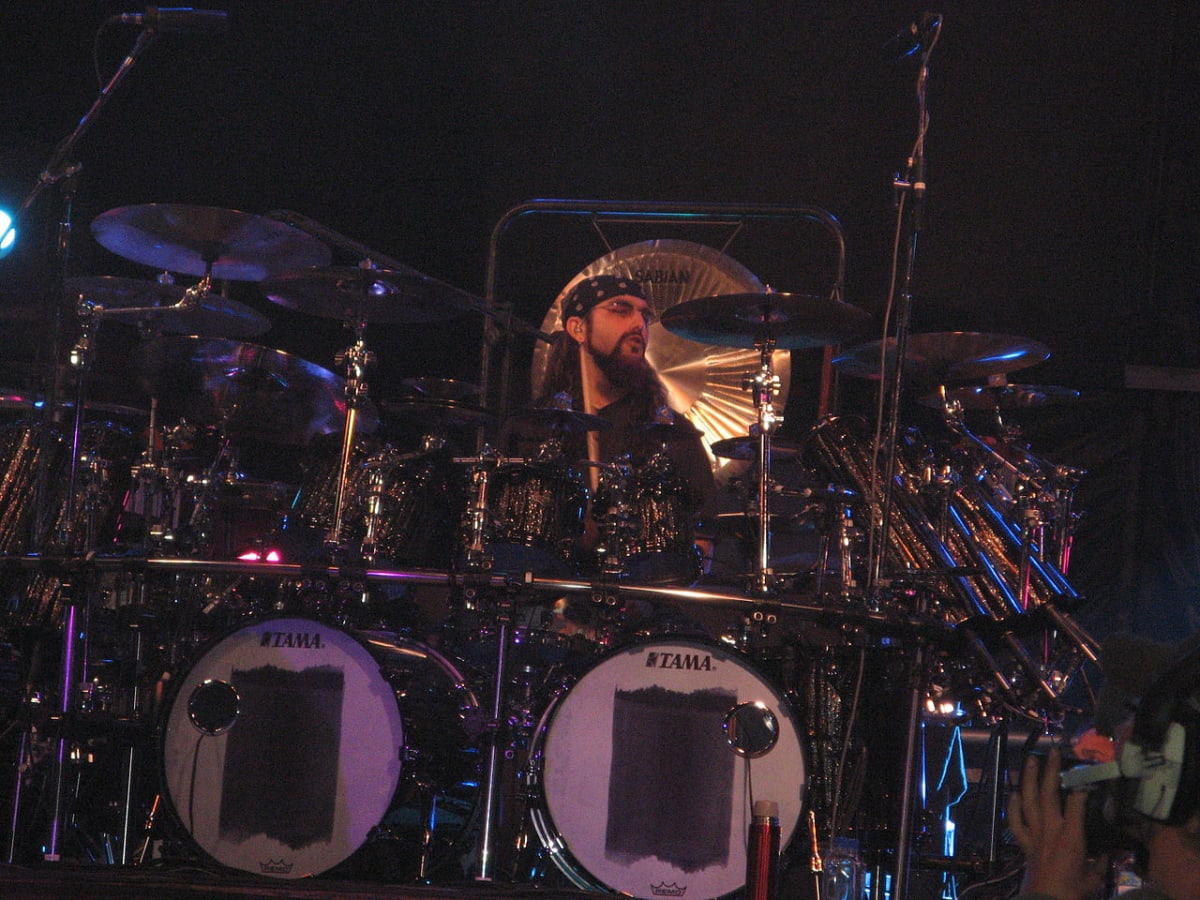
Mike Portnoy doesn't leave much room for interpretation on this one. Speaking to Thailand's Overdrive Live during the band's 40th Anniversary Tour, he was asked directly whether he and his bandmates used AI at any point during the writing of Parasomnia — Dream Theater's 2025 album released through InsideOut Music. His answer was immediate: "Oh, no, no. It's all completely organic, and that's very important to us."
From there he got specific. Jordan Rudess is into AI experimentation — Portnoy acknowledged that without any friction — but that's a personal pursuit, not a band-level one. "On a personal level, it hasn't come into the band. I don't think it will ever come into the band. I think we're all so serious enough as it is about our own instruments and our own writing and composition that that's something that's sacred to just being us and has to be fully organic."
That last phrase — "sacred to just being us" — is the crux. For a band that's spent four decades building an identity around extreme technical musicianship, the idea that a generative algorithm might assist in composition doesn't just feel lazy. It undermines the entire premise. Dream Theater's catalog is valuable precisely because it represents what these five specific people can do together. Portnoy understands that.
The AI stance and the no-click-track condition he set when rejoining in 2023 are the same philosophy in two forms. When Portnoy returned after thirteen years away, Dream Theater had been running live shows to a click track — standard practice with Mike Mangini behind the kit. Portnoy came back and that changed immediately. He was direct about why: "I would rather make a mistake and be real than be perfect and boring and a machine."
He went deeper when asked about getting lost mid-performance in Dream Theater's more extreme time signatures — 19/16 and 21/16 territory, not the easy stuff. His point was that the click track doesn't solve that problem; it makes it worse. When Mangini was in the band, if a mistake happened while locked to a track, the band couldn't adapt. There was no room. Without the click, the band's collective instinct can course-correct in real time because everyone is following a human, not a grid.
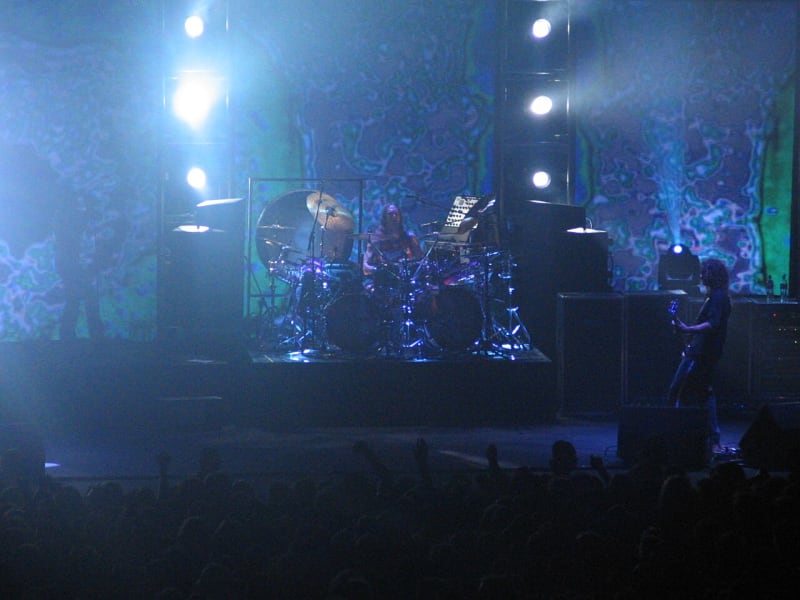
That human is Portnoy. "At the end of the day, I'm the conductor — the drummer's the conductor in the band — and I'm the one that's setting the tempos and hitting the cues and playing the retards at the end of the songs." The rest of the band follows him. So does the production: the lighting team, the laser operator, the video crew are all tracking what Portnoy does, not what a pre-programmed timeline says. He has an electronic pad positioned behind the kit that lets him cue the entire crew — audible only in their in-ear monitors. No one in the audience sees the system, but it's live and it's responsive.
If something falls apart, Portnoy has a recovery tool: the cowbell. A simple cue the whole band knows to lock back onto. It doesn't happen often, but the infrastructure exists, and it works because the band is listening to him rather than to a machine. The click track, ironically, removes that flexibility. Being locked to a track means you can't negotiate your way out of a mistake; you just have to ride it to the end. Portnoy's approach makes recovery possible because everyone is reacting to a person.
This matters in the AI conversation because it's the same argument applied at scale. AI in songwriting, like a click track in a live set, produces a kind of sterile precision that performs competence without possessing it. Portnoy is one of the few people in the genre who has played at this technical level long enough to know the difference between difficult music that sounds human and difficult music that sounds calculated. His instinct is clearly that the humanity is the point — not a byproduct of the craft, but the actual product.
Dream Theater's 40th Anniversary Tour played Bangkok on February 18. Fan-shot footage of the full show has been circulating — keep up with all tour announcements and dates as they're confirmed. The setlist on this run has been pulling deep from across four decades of catalog, which is exactly what you'd expect from a band marking this particular milestone.
Worth having on your calendar: the April 22 concert at Movistar Arena in Santiago, Chile is being professionally filmed for a Blu-ray release. If you can get to Santiago, you'd be attending what will become the official document of this era of the band. If you can't, the release will come.
Dream Theater's position on AI is documented now. Portnoy put it clearly and without hedging. In a moment when a lot of bands are being vague about what tools they are and aren't using — with AI-driven music fraud now in federal courts — that specificity has value — whether you care about the philosophical argument or you just want to know what you're buying when you put money into the band.
Follow all breaking metal news at Metal Mantra. Check out the latest tour announcements and dates as they drop.
Pick up Parasomnia on Amazon.
Stream or grab Parasomnia on Amazon.