1. Metallica: Some Kind of Monster
There is no cleaner entry point because there is nothing clean about it.
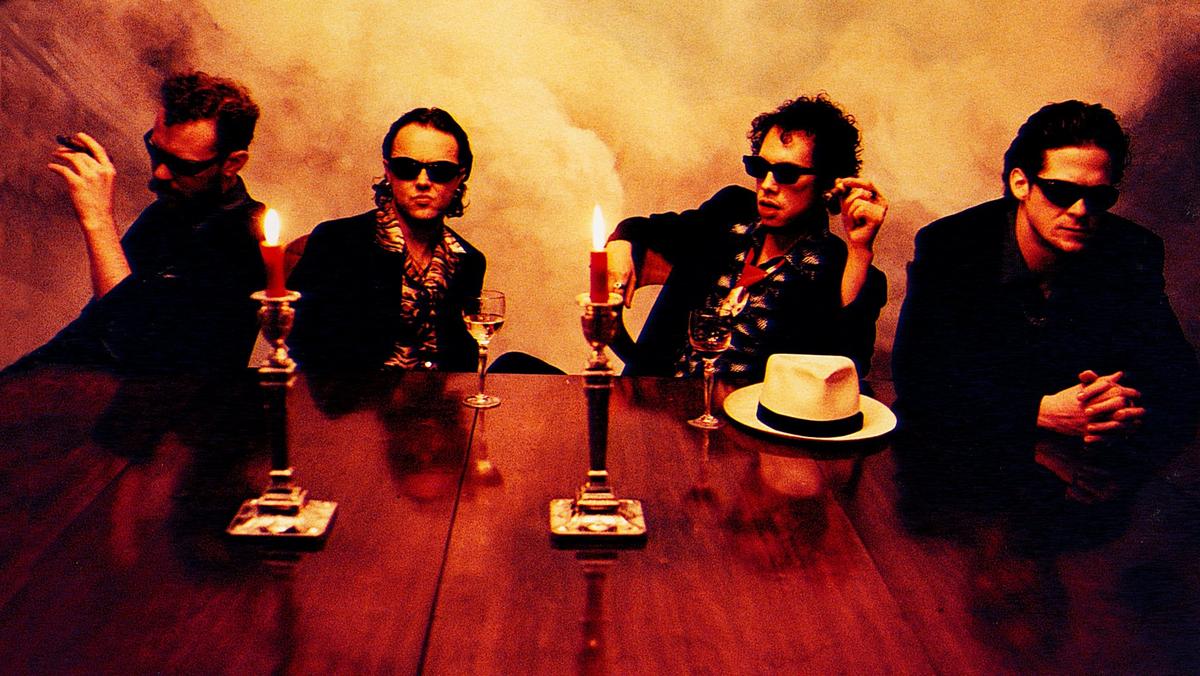
Some Kind of Monster catches Metallica in the most uncomfortable possible era: Jason Newsted gone, James Hetfield in recovery, Lars Ulrich trying to steer the room, Kirk Hammett trapped between competing weather systems, and St. Anger forming under fluorescent therapy-session light. It is not the documentary you show someone to explain why Metallica became huge. It is the one you show when you want to explain what happens after huge stops feeling like victory.
The film works because almost nobody looks cool. That is rare in band mythology. The editing does not protect the machine. You get ego, silence, resentment, money, fear, and grown men trying to figure out whether the band is still a band or just an expensive habit with a logo.
Pair it with Metal Mantra's coverage of the band's ongoing stadium-era machine, including Metallica's Sphere dates and the deeper catalogue context around Reload getting the box-set treatment. The documentary hits harder when you remember Metallica did not freeze in that ugly room. They survived it, for better and worse.
2. Anvil! The Story of Anvil
This is the one that hurts if you have ever loaded gear through a side door while the headliner gets the good parking.
Anvil! The Story of Anvil follows Steve “Lips” Kudlow and Robb Reiner as they chase one more chance at relevance after years of almosts. It could have been cheap comedy. Instead, it becomes one of the most honest films ever made about the gap between influence and survival.
The reason metal fans keep returning to it is simple: Anvil were not delusional about loving the music. They were delusional, maybe, about how much the world owed them for it. That is a more complicated wound. You can laugh at the bad tours and still recognize the loyalty holding the whole thing together.
Watch this when you need the unromantic version of persistence. No algorithm, no comeback fantasy, no fake industry redemption arc. Just two lifers trying to drag a dream across another border crossing.
3. Metal: A Headbanger's Journey
Sam Dunn's Metal: A Headbanger's Journey is still the best gateway doc for someone who wants the whole map without getting buried under scene gatekeeping. It moves from Sabbath and Maiden into extreme metal, power metal, black metal, censorship fights, fandom, and the anthropology of why this music becomes identity instead of background noise.
The film has the advantage of curiosity. It is not trying to flatten metal into one approved story. It asks why people build their lives around heaviness, then lets musicians, fans, and scholars pull in different directions.
Longtime metalheads may argue with the taxonomy. Good. Metal has always been a family tree drawn by people yelling across a parking lot.
If it is not on a subscription service when you search, do not treat that as the end. It rotates in and out, and it is one of the few metal docs where a rental or disc copy makes sense.
4. Murder in the Front Row
If your version of thrash begins and ends with album covers, Murder in the Front Row fixes that fast.
The film is built around the Bay Area thrash scene before it became legacy branding: kids, flyers, clubs, tape trading, photography, and the early collision of Metallica, Exodus, Testament, Death Angel, and the surrounding ecosystem. It understands that scenes are not made only by the bands that escape. They are made by the rooms, photographers, friends, rivalries, and maniacs who keep showing up.
This belongs next to our Best Thrash Metal Albums of All Time because it gives the records geography. Thrash was not just a tempo decision. It was a regional social weapon, and the Bay Area had its own accent.
5. The Decline of Western Civilization Part II: The Metal Years
Penelope Spheeris caught the Sunset Strip at its most ridiculous and revealing.
The Metal Years is often remembered for the absurdity: hot tubs, hairspray, wasted ambition, and interviews that feel like somebody forgot the camera was judgmental. But there is more going on than glam-metal cringe. The film documents a scene where fantasy, commerce, sex, poverty, and fame hunger all blur together until nobody can tell who is performing and who is drowning.
It is not a complete picture of metal, and it was never supposed to be. It is Los Angeles at a specific fever pitch: funny, bleak, and rotten with ambition.
6. Lemmy
A Lemmy documentary can fail in two ways: it can treat him like a saint, or it can treat him like a punchline. Lemmy avoids both by letting the daily rhythm speak.
You get the apartment, the bar, the road, the old stories, the war memorabilia, the jokes, the loneliness, the loyalty, and the stubborn work ethic that made Motörhead bigger than genre math. Lemmy was not metal in the narrow taxonomy sense. He was metal in the way that actually matters: volume, conviction, and zero appetite for polish.
If you only know the T-shirt version of Lemmy, start here and then go back to the records with the volume up.
7. Heavy Metal Parking Lot
It is short, messy, and more culturally useful than half the prestige documentaries ever made about rock music.
Heavy Metal Parking Lot captures Judas Priest fans outside a 1986 arena show in Maryland, and that is basically the whole pitch. No grand narration. No tidy thesis. Just teenage chaos, beer, denim, hormones, and the pre-internet language of fandom in the wild.
The reason it still survives is not nostalgia. It survives because it shows metal fandom before it learned to brand itself. Nobody is curating a feed. Nobody is explaining their identity for a camera in modern documentary language. They are just there, loud and weird and completely alive.
8. Last Days Here
Pentagram's Bobby Liebling is not an easy subject, and Last Days Here is not comfortable viewing.
The film follows addiction, damage, comeback hope, and the people trying to keep Liebling alive long enough for the music to matter again. It is doom metal as human consequence rather than aesthetic. The riffs are part of it, but the real subject is what happens when cult status cannot protect a person from the wreckage around him.
This is not the doc to put on casually while folding laundry. It also cuts through a common underground fantasy: that being influential is the same as being okay. It is not.
9. Get Thrashed
Get Thrashed is less elegant than Murder in the Front Row, but it covers a wider battlefield. That matters.
The film traces thrash from the early explosion into regional scenes, major-label collisions, underground loyalty, and the 1990s comedown. It is packed, sometimes too packed, but that density matches the subject. Thrash did not move politely. It spread through flyers, zines, tapes, vans, and kids who wanted everything faster.
Use this as the broader survey after you have watched the Bay Area-specific story. One gives you the room. The other gives you the sprawl.
For anyone building a thrash education from scratch: watch Murder in the Front Row, watch Get Thrashed, then go album by album through the classics.
10. Until the Light Takes Us
Black metal documentaries usually stumble because the subject attracts lazy sensationalism. Until the Light Takes Us is colder and more patient than that.
The film focuses on the Norwegian black metal world through figures like Fenriz and Varg Vikernes, which means it sits close to both the music and the violence around the scene. That requires caution. Do not watch it expecting a complete moral map or a beginner-friendly genre guide. Watch it because it captures the suffocating atmosphere around a scene that became infamous faster than it could control its own story.
Metal Mantra does not chase every underground black metal tangent, and that filter matters. This film earns a place because it deals with black metal history that crossed into mainstream metal consciousness.
11. Iron Maiden: Flight 666
Flight 666 is the cleanest tour-machine documentary on this list, and that is not an insult.
Iron Maiden's 2008 Somewhere Back in Time run had the kind of scale most metal bands never touch: a custom aircraft, Bruce Dickinson in the cockpit, and a global routing plan that turned logistics into part of the spectacle. The film is not as psychologically raw as Some Kind of Monster, but it is excellent at showing what a high-functioning heavy metal institution looks like when everyone knows the mission.
For more Maiden context, Metal Mantra has already dug into the band's wider legacy with Iron Maiden's discography and current-era movement around the Run for Your Lives tour. Flight 666 fits between those poles: legacy as muscle memory, not museum dust.
12. We Are X
X Japan sit in a strange place for a lot of American metal listeners: hugely influential, visually massive, emotionally theatrical, and still somehow under-discussed in everyday metal conversation.
We Are X is not a straight genre explainer. It is a survival story wrapped in visual kei, grief, ambition, collapse, and spectacle. Yoshiki's presence carries the film, but the band history gives it teeth. This is not just “look how big they were overseas.” It is a reminder that heavy music history is bigger than the English-language canon many fans inherit by default.
Put this on when you want a metal-adjacent documentary that stretches the frame without leaving heaviness behind. The emotional volume is high. So is the damage.
The quick watch order
If you only have one night, start with Some Kind of Monster. It is the most immediately gripping and the easiest to argue about afterward.
If you want scene history, go Murder in the Front Row, Get Thrashed, then The Decline of Western Civilization Part II. That run gives you Bay Area thrash, the wider thrash spread, and the Sunset Strip circus from three different angles.
If you want the lifer route, watch Anvil!, Lemmy, and Last Days Here. That trilogy strips away the clean mythology and leaves you with obsession, survival, and the cost of staying in the game long after the easy applause disappears.
And if you want the broadest education, keep Metal: A Headbanger's Journey in rotation. It is still one of the best on-ramps for understanding why metal fans do not treat this music like background entertainment.
Availability will keep shifting. The good films remain. Start with the ones that make the room feel less safe.